

The “lone wolf” mentality—the belief that strength comes from handling everything alone—is particularly dangerous for men in addiction recovery. While society often celebrates male independence and self-reliance, this mindset becomes a trap that can sabotage recovery efforts and increase relapse risks. Research consistently shows that social support is crucial for successful addiction recovery, with recovery support group attendance being strongly associated with positive outcomes. Men who embrace community support during recovery are more likely to achieve lasting sobriety and build fulfilling, sustainable lives beyond addiction.
Understanding the Lone Wolf Mentality
What Is the Lone Wolf Mentality?
The lone wolf mentality refers to the belief that individuals should handle their problems independently without seeking help from others. Men are often taught to see vulnerability as weakness, making them less likely to express emotions or seek help, often turning to substances instead.
This mindset manifests in several ways:
- Reluctance to ask for help
- Preference for handling problems alone
- Viewing emotional expression as weakness
- Avoiding group activities or support systems
- Believing that seeking help demonstrates failure
Why Men Are Particularly Susceptible
Men face unique cultural and social pressures that reinforce the lone wolf mentality:
Cultural Conditioning: From childhood, many men are taught to be stoic, independent, and emotionally reserved. Phrases like “boys don’t cry” or “man up” create deep-seated beliefs about masculinity.
Social Expectations: Society expects men to be providers and protectors, roles that emphasize strength and self-sufficiency over vulnerability and interdependence.
Emotional Suppression: Traditional masculine norms discourage emotional expression, leading men to internalize their struggles rather than share them with others.
Fear of Judgment: Men often worry that seeking help will be perceived as weakness or failure by peers, family, or society.
The Dangerous Connection Between Isolation and Addiction
How Isolation Fuels Addiction
There is a strong connection between loneliness and addiction, as substance use disorders can lead to increased social isolation and loneliness. This creates a vicious cycle:
- Emotional Numbing: Men use substances to cope with feelings of loneliness, anxiety, or depression
- Social Withdrawal: Addiction behaviors lead to damaged relationships and social isolation
- Increased Substance Use: Greater isolation leads to more frequent substance use as a coping mechanism
- Deepening Isolation: Continued addiction further damages social connections
The Relapse Risk Factor
Most rehab treatment programs strive to help recovering addicts overcome the strong connection between isolation and relapse by introducing them to a supportive community. Without community support, men in recovery face significantly higher relapse risks.
Key relapse triggers for isolated men:
- Emotional stress without support systems
- Lack of accountability partners
- Limited coping strategies beyond substance use
- Absence of positive social influences
- Overwhelming feelings of loneliness or depression
Why Community Is Essential for Men’s Recovery
The Science Behind Social Support in Recovery
Social support is protective against developing alcohol and substance use disorders and is associated with beneficial addiction treatment outcomes. Research demonstrates that men with strong social support networks:
- Have lower relapse rates
- Experience better mental health outcomes
- Develop stronger coping mechanisms
- Maintain sobriety for longer periods
- Report higher life satisfaction in recovery
Benefits of Community-Based Recovery
Accountability and Structure: Community living provides natural accountability systems where peers encourage healthy behaviors and discourage destructive ones.
Shared Experiences: Connecting with others who understand addiction struggles reduces shame and isolation while providing practical recovery insights.
Emotional Support: Having people to talk to during difficult moments provides alternatives to substance use for emotional regulation.
Social Skills Development: Recovery communities help men rebuild social skills that may have deteriorated during active addiction.
Purpose and Meaning: Contributing to others’ recovery journeys creates a sense of purpose that strengthens personal commitment to sobriety.
Breaking Down the Barriers to Seeking Help
Common Questions About Male Recovery Support
Q: Does seeking help make me weak? No, seeking help demonstrates strength and wisdom. Recovery requires courage to face difficult truths and make significant life changes.
Q: Can I maintain my independence in recovery? Yes, healthy community support enhances rather than diminishes true independence by providing tools for sustainable self-reliance.
Q: Will other men understand my struggles? Men’s recovery groups specifically address the unique challenges men face in addiction and recovery, providing understanding and practical guidance.
Q: How do I find the right recovery community? Look for groups or programs that emphasize accountability, structure, and shared experiences while maintaining respect for individual goals.
Overcoming Resistance to Community Support
Start Small: Begin with one-on-one conversations with a counselor or trusted friend before joining larger groups.
Choose Male-Focused Programs: Men-only recovery programs address specific male concerns without the added complexity of mixed-gender dynamics.
Focus on Practical Benefits: View community support as a practical tool for achieving recovery goals rather than an emotional dependency.
Reframe Help-Seeking: Consider seeking support as an investment in long-term success rather than an admission of failure.
Types of Community Support for Men in Recovery
Formal Support Systems
12-Step Programs: Alcoholics Anonymous and Narcotics Anonymous provide structured community support with proven track records.
SMART Recovery: Offers a science-based approach to addiction recovery with practical tools and techniques.
Men’s Recovery Groups: Specifically designed to address male-specific recovery challenges and provide peer support.
Sober Living Homes: Structured residential communities that bridge the gap between treatment and independent living.
Informal Support Networks
Recovery Mentors: Experienced individuals in recovery who provide guidance and accountability.
Workout Partners: Exercise buddies who share recovery goals and promote healthy lifestyle changes.
Hobby Groups: Sober recreational activities that provide social connection and stress relief.
Faith Communities: Religious or spiritual groups that offer community support within a framework of shared beliefs.
Building Sustainable Recovery Communities
Elements of Effective Recovery Communities
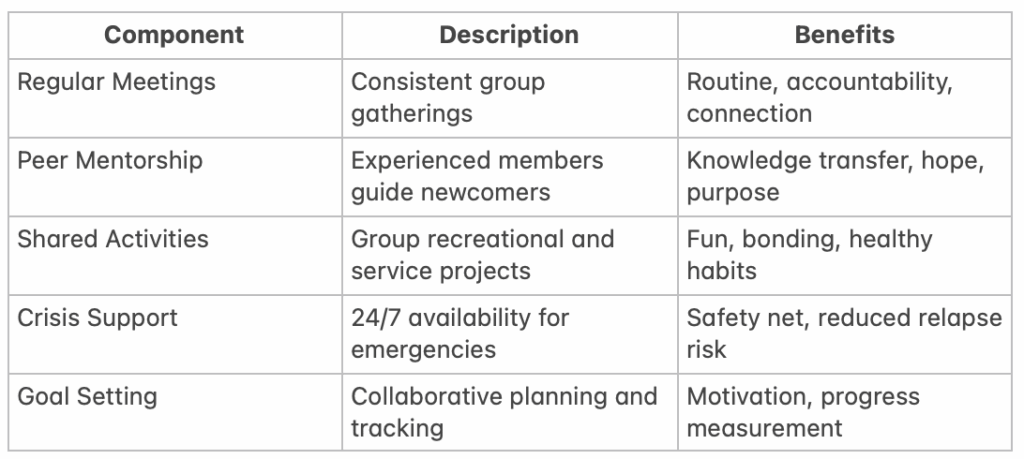
Creating Your Support Network
Assess Your Needs: Identify specific areas where support would be most beneficial (emotional, practical, social, spiritual).
Diversify Your Network: Include different types of supporters: peers, mentors, professionals, and family members.
Maintain Reciprocity: It is so common for the recovering lone wolf to tip-toe their way into friendships by being supportive of others but being deeply resistant to allowing others to support them. Balance giving and receiving support.
Regular Engagement: Consistent participation strengthens relationships and maximizes support benefits.
Practical Steps to Overcome the Lone Wolf Trap
Daily Actions for Community Building
Morning Check-ins: Start each day by connecting with at least one person in your recovery network.
Evening Reflections: Share daily experiences with a trusted recovery partner or group.
Weekly Commitments: Attend regular recovery meetings or group activities.
Monthly Service: Volunteer to help others in recovery to build purpose and connection.
Emergency Support Strategies
Crisis Contact List: Maintain a list of people to call during difficult moments or cravings.
Safe Spaces: Identify places where you can go for immediate support and accountability.
Coping Alternatives: Develop non-substance strategies for managing stress, with community support as the primary option.
Professional Backup: Have therapists, counselors, or medical professionals available for severe situations.
The Role of Professional Support
When to Seek Professional Help
Professional support becomes essential when:
- Mental health issues complicate recovery
- Family relationships need mediation
- Career or financial problems arise
- Legal issues require attention
- Medical complications develop
Types of Professional Support
Addiction Counselors: Specialized therapists who understand addiction and recovery processes.
Mental Health Professionals: Psychiatrists and psychologists who address co-occurring mental health conditions.
Case Managers: Coordinators who help navigate various support services and resources.
Medical Doctors: Healthcare providers who address physical health issues related to addiction.
Long-term Success in Community-Based Recovery
Maintaining Community Connections
Gradual Independence: Slowly reduce dependency on support systems while maintaining meaningful connections.
Giving Back: Mentor newer recovery community members to maintain engagement and purpose.
Evolving Relationships: Allow recovery relationships to develop into genuine friendships beyond addiction support.
Continued Learning: Stay engaged with recovery education and personal development within community settings.
Measuring Recovery Success
Quality Metrics
- Relationship satisfaction
- Emotional stability
- Life purpose and meaning
- Physical health improvement
- Career and financial progress
Community Integration Indicators
- Regular participation in sober activities
- Comfortable asking for help when needed
- Ability to support others effectively
- Strong accountability partnerships
- Reduced isolation behaviors
How Elevate Recovery Homes Supports Men’s Community-Based Recovery
At Elevate Recovery Homes, we understand that breaking free from the lone wolf mentality is crucial for lasting recovery success. Our Colorado-based sober living homes specifically serve men who are transitioning from treatment programs back to independent living.
Our comprehensive approach addresses the four essential elements of successful recovery:
Structure: We provide a structured environment that allows residents to focus on recovery goals while developing consistent daily routines that support long-term sobriety.
Accountability: Our program holds members accountable for their actions while encouraging personal responsibility for recovery outcomes.
Support: We create a supportive community of like-minded men working toward similar goals, fostering the connections that are essential for overcoming isolation.
Action: We encourage residents to take concrete steps toward recovery through therapy, support groups, and other evidence-based resources.
Our dedicated team includes a House Manager, Certified Addiction Specialist, and Peer Recovery Coaches who provide around-the-clock support and guidance. Additionally, we have licensed therapists, counselors, and case managers on staff to meet the diverse needs of our residents.
Located in the Denver area neighborhoods of Arvada, Denver, Centennial, Englewood, Westminster, and Northglenn, our homes provide safe, supportive environments where men can build the skills and confidence needed to transition into healthy, sustainable lifestyles. Through group activities, support meetings, and peer mentorship, residents develop the strong community connections that are essential for long-term recovery success.
If you or a loved one is seeking post-treatment care that addresses the unique challenges men face in recovery, we invite you to join our community and take the first step toward lasting recovery. Contact Elevate Recovery Homes to learn more about how our community-based approach can help break the lone wolf trap and build a foundation for lifelong sobriety.